Despite it’s reputation, Beef Wellington is deceptively simple, comprised of only 3 (maybe 4, depending how you count) main ingredients wrapped in a pretty package. The ingredients themselves and preparation are the main stars of this dish, and I’ve broken down the fancy terms, explained the techniques, and tossed in some cheat codes to make this recipe as tame as possible. It’s a sure bet you’ll impress anyone with this recipe… except my daughter, she spit it out.
The first time I made this recipe was for a party my husband was throwing for his co-workers – it was a drinks and hors d’oeuvres affair, so I adapted the recipe to make Beef Wellington Bites – they were a huge success, so I’ve added that option in the recipe below.


Prep Time: 1 hr 15 min
Bake Time: 40-45 min
Total Time: approx 2 hr
Serves 6-8 or 48 bites
- 2 lbs center-cut beef tenderloin (filet), trimmed*
- olive oil
- 2 tablespoons unsalted butter
- 1 1/2 lbs mixed mushrooms of choice, rough chopped
- 1 shallot, rough chopped
- Leaves from 1 sprig of thyme
- Dijon mustard
- Prosciutto
- 14-34 oz of Frozen puff pastry, thawed
- salt and pepper
- 1 egg, beaten
*Tenderloin is, as it’s name suggest, a very tender steak, and while delicious, it lacks any bones or significant marbling to give it a flavor boost. If you would rather have a more flavorful steak, you can opt for a different cut of meat to suit your tastes – but make sure it’s boneless and roughly cylindrical in shape.
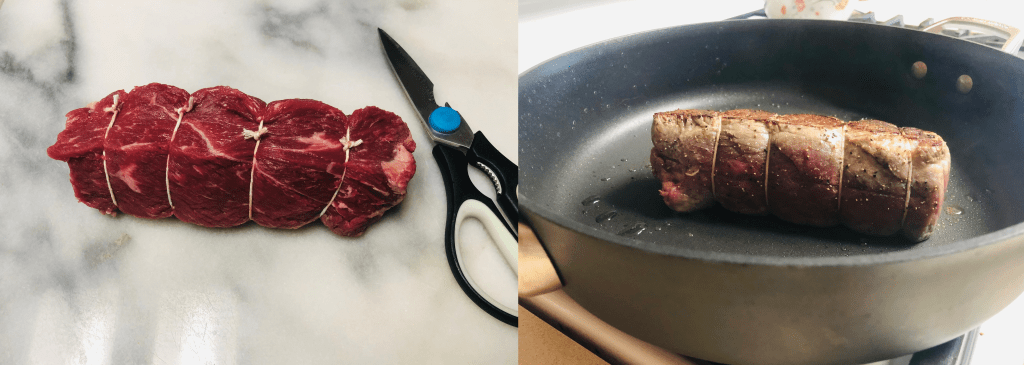
- Using kitchen twine, tie your tenderloin in 4 places (to help keep it’s cylindrical shape while searing) and generously season all sides with salt and pepper. If you don’t have twine, don’t worry, it may be a little more difficult to evenly sear each side later on, and it might not have that absolute *pro* look, but the end result will still be delish and beautiful.
- Place a skillet over high heat and drizzle with olive oil; allow time for pan to heat – you’ll know when it’s ready when the oil spreads out and looks thin, like water, rather than it’s usual thick viscosity. The pan shouldn’t be smoking, but nearly.
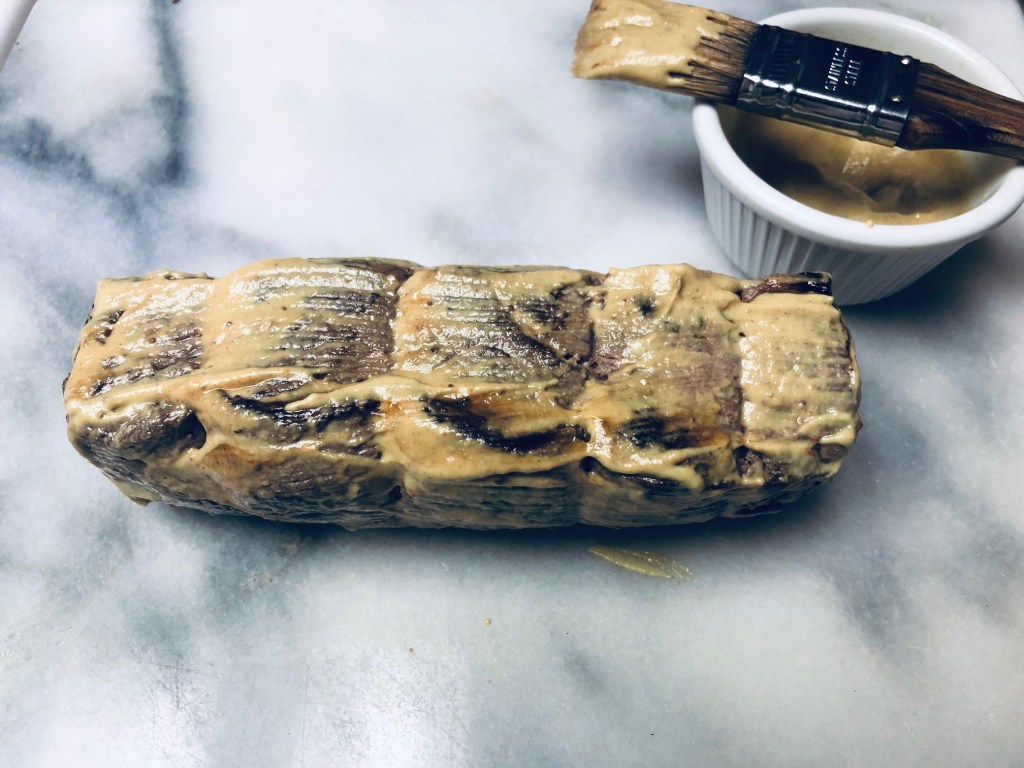
- Sear the tenderloin for about 2 minutes, repeating for every side, including the ends. You’ll need a pair of a tongs to hold the meat in place to sear the ends, and possibly some of the sides if you weren’t able to tie the tenderloin. At this stage you aren’t actually cooking the beef, just getting a nice, crisp, flavorful sear all around – you’ll finish it up in the oven later, after everything is fully assembled. Once all sides are seared, move it to a plate and let rest. When it’s cool enough to handle, cut and remove the twine then generously coat all sides with Dijon mustard – if opting for the bite size version of this recipe, skip the Dijon for now. Place in fridge to chill.
- While your meat is relaxing, make the duxelles (‘dook-sell’ – this a French term basically meaning sautéed mushrooms). Gather your mushrooms, shallot, and thyme leaves and pulse in a food processor until finely chopped – think: potting soil. If you don’t have a food processor then use your knife to mince everything as small as you can – speaking from experience, using a blender as an alternative is just frustrating and not as productive as a knife. This mixture is going to be spread out into a rectangle that you will roll your tenderloin into, so the ingredients needs to be small enough to spread like sushi rice.
- Add your butter to a skillet and melt over medium/med-high heat. Add your shroom mixture and cook until all liquid has evaporated, about 20-25 minutes. Stir continuously; you want to dry everything out to avoid any possible liquid seepage later on that would cause a soggy crust, but you don’t want crispy mushrooms. When it looks MORE like potting soil, turn off heat, season with salt and pepper, transfer to a bowl, and cool in fridge.
- Assembly time! I have two options for your consideration:
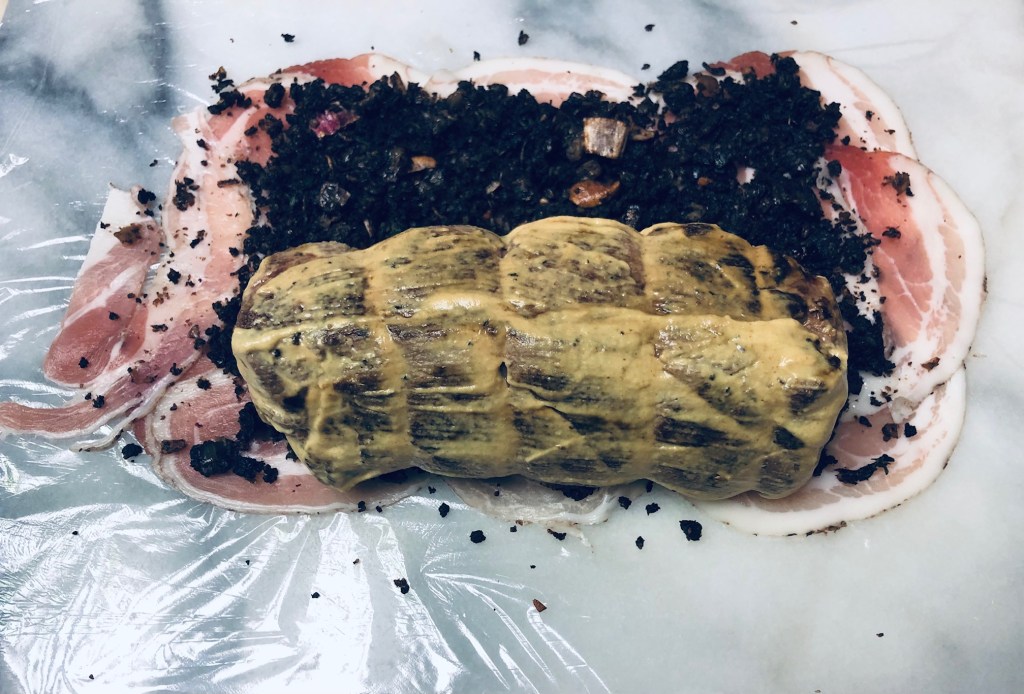
- Traditional: Cut 2 pieces of plastic wrap twice as long as your tenderloin and place on your work surface so they are slightly overlapping horizontally. About a small hands width (3-4 inches if your hands aren’t small) from the bottom of the plastic wrap, place a slice of prosciutto in the center, and shingle slices to either side until it’s slightly longer than your tenderloin. Repeat this process for a second row. You want the prosciutto to fully encase the tenderloin, this is to create a seal around the meat and protect the puff pastry from any juices that may be released while the tenderloin continues to cook in the oven, again, to avoid a soggy crust, so if two rows it’s big enough to cover the whole thing, go ahead and make a third row. Grab your duxelles (’cause you know what that is now) and evenly spread a thin layer over the prosciutto.
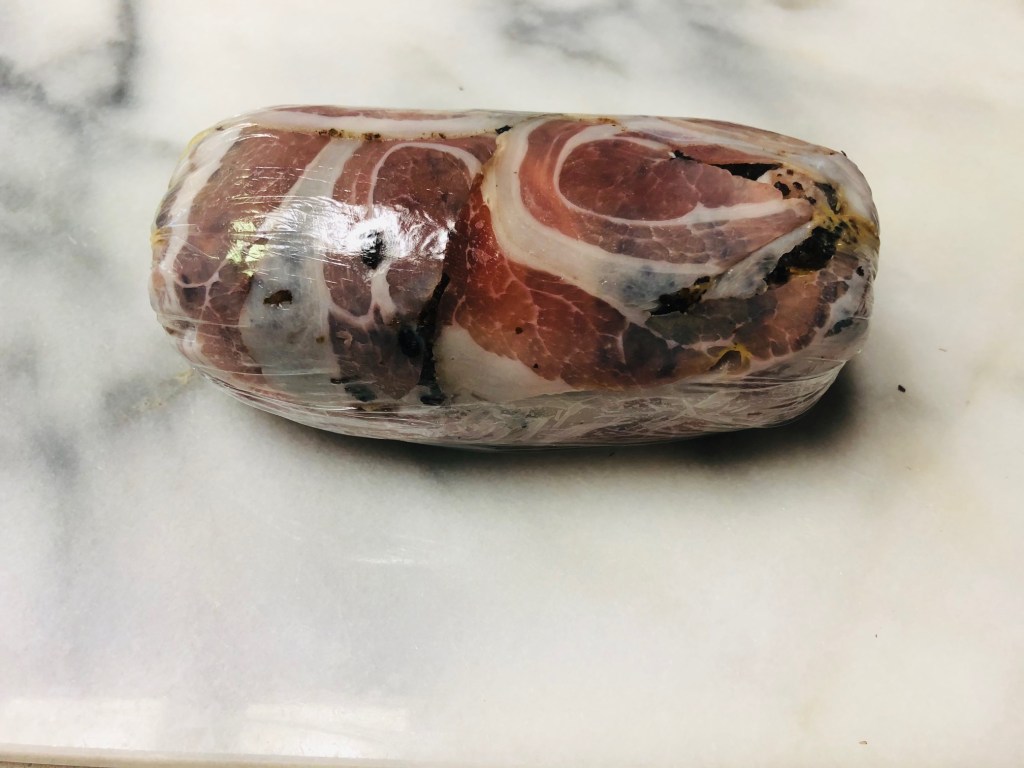
- Get your tenderloin and season again with salt and pepper, then place it on the prosciutto, centered horizontally. Roll the meat into the prosciutto-mushroom mixture, using the plastic wrap to roll tightly – just like if you were making sushi: prosciutto = seaweed, duxelles = rice, tenderloin = fish. As you’re rolling, tuck the extra prosciutto on the ends into the roll, then twist the plastic wrap on either side tightly (like a piece of taffy or your grandma’s butterscotch candy) to create a tight log and transfer to the fridge to chill.
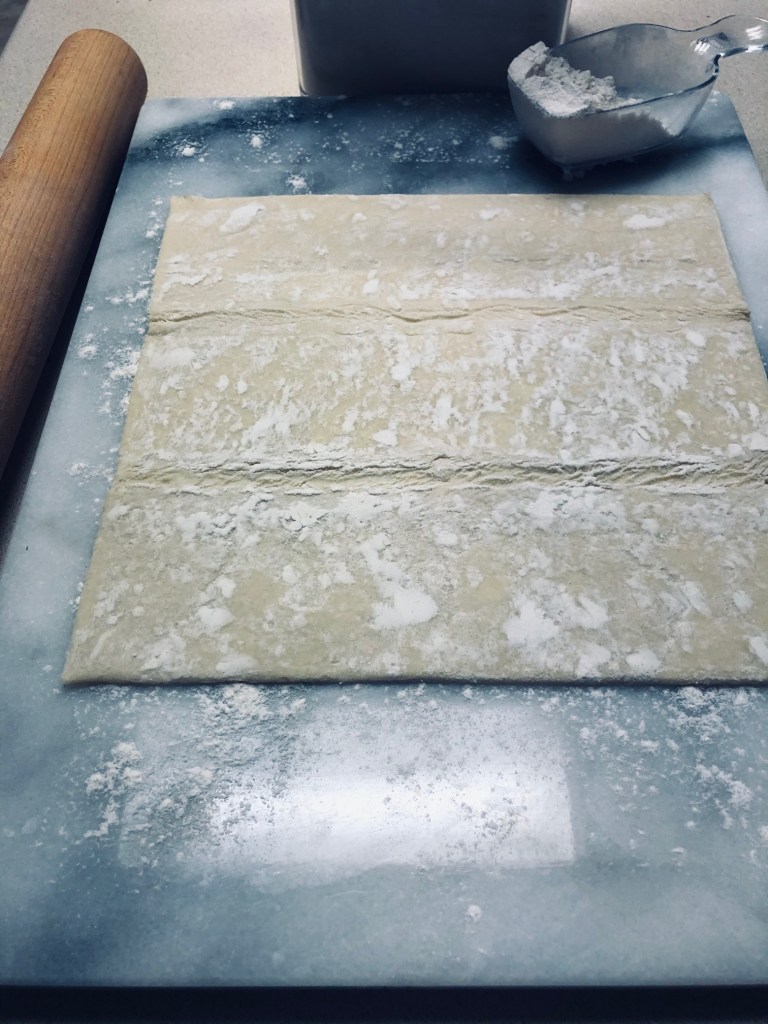
- Heat your oven to 425 degrees. Lightly flour your work surface, grab your puff pastry, and lay it out flat. You’re going to roll your tenderloin up again, just like you did a second ago with your prosc-ushi (see what I did there? PROSCiutto sUSHI), so, again, you’re going to want to make sure your pastry is slightly longer than your tenderloin log, and wide enough to fully encase it. You’re going to want to roll out your pastry a little bit, but if that still doesn’t get it to the size you need, grab a second sheet of pastry, and your beaten egg. Wet the top of one edge of your first pastry sheet, and the bottom edge of your second sheet, stick them together and using a rolling pin, press the edges together and roll out as one piece.
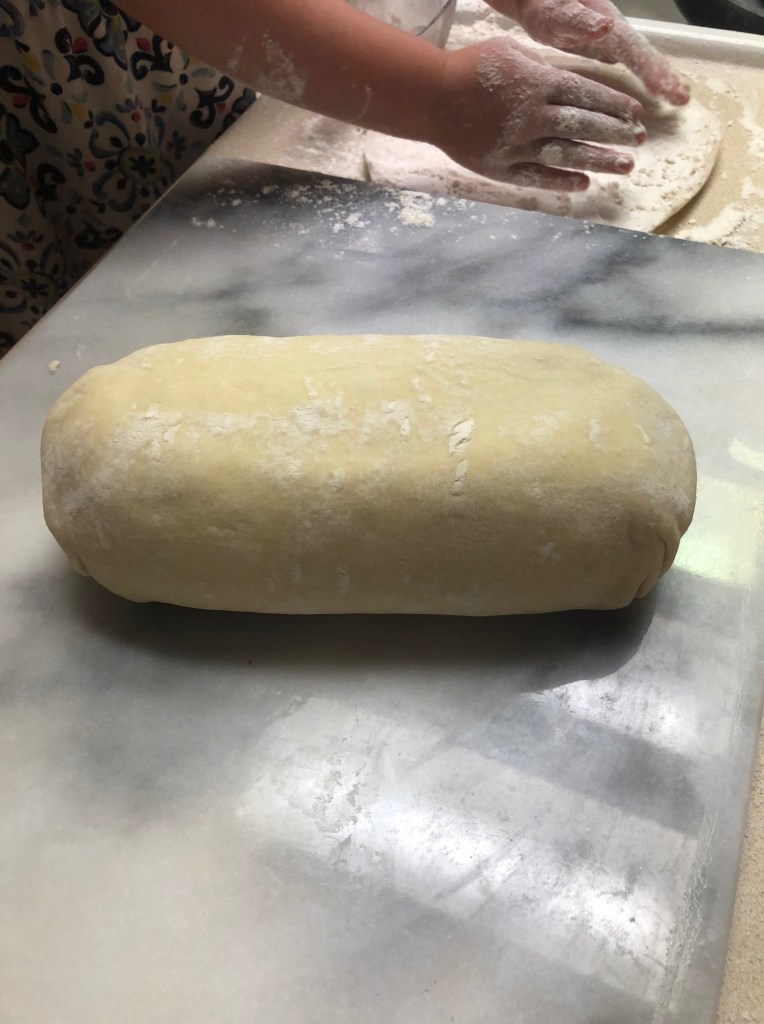
- Remove your tenderloin from the plastic and place it on your pastry, centered horizontally. Brush the remaining exposed edges of pastry with the beaten egg and tightly roll beef in the pastry, tucking the excess pastry on the sides into the roll. Trim excess pastry and crimp seams together. Get your plastic wrap back out and go ahead and wrap it back up like when you were pretending your tenderloin was a piece of taffy. Chill for 20 minutes in the fridge before baking.
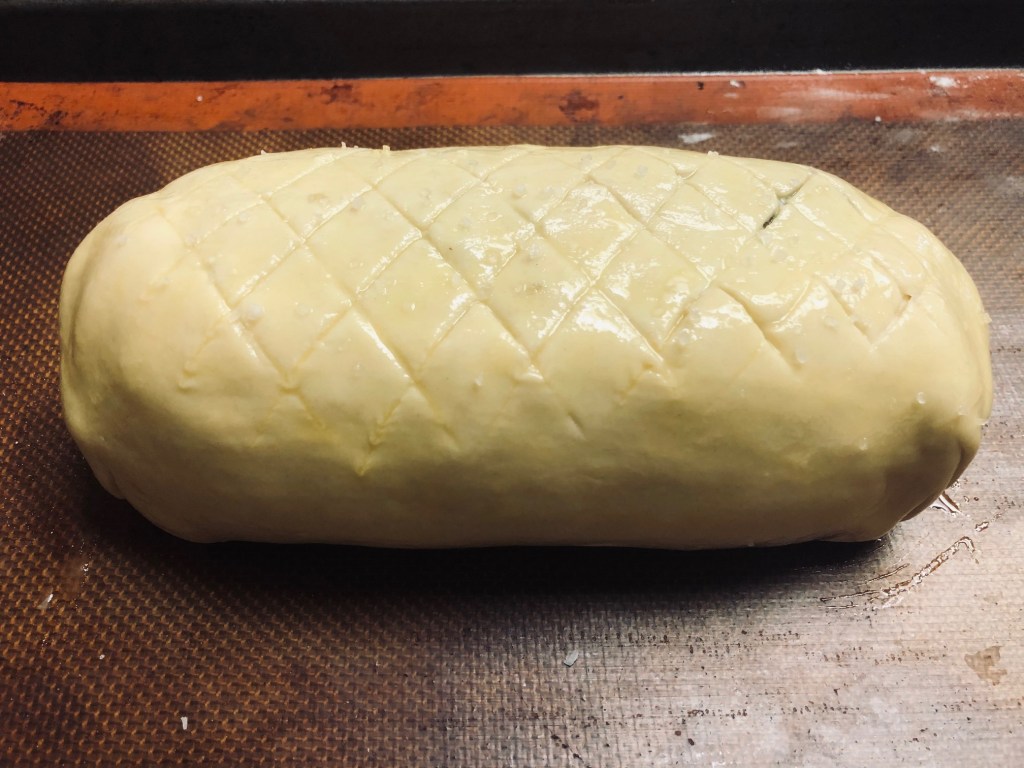
- Remove tenderloin from the plastic wrap and place on a sheet pan that has been lined with parchment. At this point you can either do simple elegance and go ahead and egg wash your Beef Wellington and bake, or you can go the extra mile and decorate it with some shallow scoring (do not perforate the pastry, just gently cut to create a design), or add an over-lay of lattice puff pastry. Whatever you decide, make sure you brush it with egg wash to get that beautiful crackly golden color and sprinkle with some flaky salt.
- Bake until the pastry is golden and the center is a cool 120 degrees for medium-rare – about 40-45 minutes. Let rest 10 minutes before slicing and serving.
- Bites: Grab your tenderloin from the fridge, season again with salt and pepper, and slice it up into bite size pieces, about 1″ square-ish. Get your prosciutto and cut into pieces large enough to encase at least most of each tenderloin bite. Spread a layer of Dijon mustard on each slice of prosciutto and wrap up your tenderloin bites. Set aside for the moment.
- Heat your oven to 425 degrees. Lightly flour your work surface and lay your puff pastry out flat. Roll out your pastry a little then cut into 2″ by 2″ squares, or if you have a circular cutter, 2″ circles. Do this until you have pastry for all your bites, or you run out of pastry.
- Now’s the time to stuff your pastry; there are several ways to do this, so do which ever is easiest for you. Get your duxelles (’cause you know what that is now), a spoon, and beaten egg. Either: place a piece of pastry in the palm of your cupped hand, dollop a small amount of duxelles in the center of the pastry, place a piece of tenderloin, wet edges of pastry with egg, then gather edges and pinch seams together, similar to making a bao/steamed bun or dumpling, or, place pieces of pastry in the cups a muffin tin, dollop a small amount of duxelles in the center of the pastry, place a piece of tenderloin, wet edges with egg, then gather the edges and pinch seams together. Place bites in the fridge to chill for 20 minutes.
- Place Beef Wellington Bites on a sheet pan lined with parchment paper, egg wash each bite and lightly sprinkle with flaky salt. Bake for 20-25 minutes, or until pastry is golden.
- Remove from oven and let rest about 10 minutes before serving.
 Provisioned Kitchen